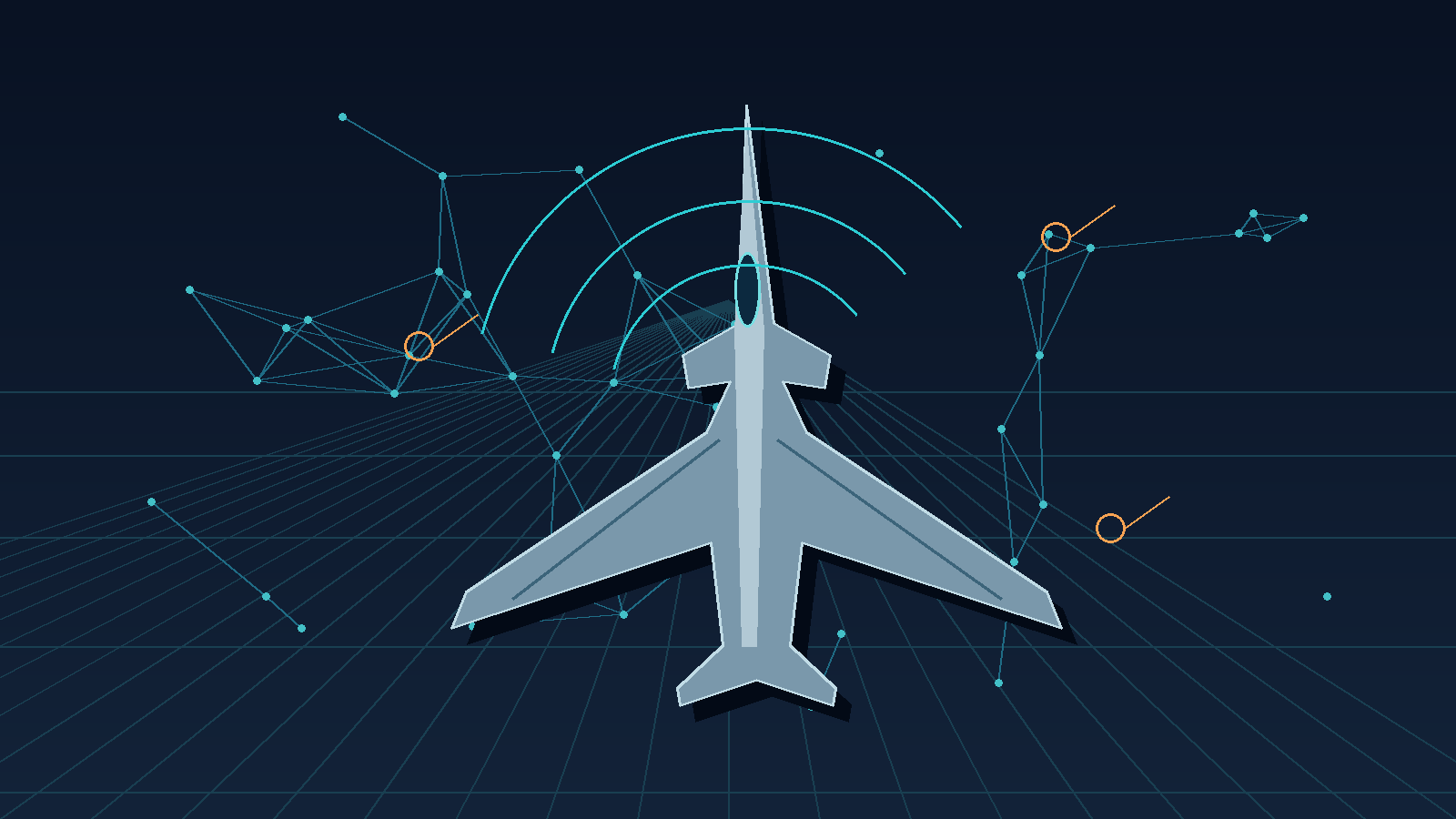
Dassault Aviation has flight-tested two artificial intelligence algorithms on the Rafale fighter, one developed by its own engineers and one developed with Thales. The company describes them as support for human crews and says they have reached a level of maturity suitable for future Rafale upgrades. It has not disclosed what the algorithms actually do, nor the details of the trials.
That final sentence is the one worth holding on to. A test announcement is not evidence of a fighter choosing its own targets, and turning it into that story would be bullshit dressed up as strategic analysis. The real development is significant enough without hiring a fictional killer robot to make it frightening.
The layer through which war is understood
This is what I mean by war’s fourth dimension. It is not a new coordinate in physics, nor a claim that some official military domain has just been invented. It is the digital layer that helps determine what military personnel can see, what they are willing to trust and what they are able to do. Software does not need to occupy territory in order to influence what happens on it.
An aircraft runs on information as much as on thrust and fuel. Wherever an algorithm filters data, ranks signals or supports an operational choice, it shapes the premises of a human decision. We do not know whether the two Rafale algorithms perform those particular tasks. They illustrate the questions that AI integration ought to provoke; they are not functions anyone can attribute to this announcement.
The distinction matters more than it may appear. A person can retain full authority over an action while becoming steadily more dependent on a system’s account of the situation. Keeping a finger on the button is not the same as keeping a meaningful ability to challenge everything that led up to it.
Human support is a purpose, not a safety certificate
Defence companies across the world are exploring AI to speed up decisions and to coordinate crewed aircraft with uncrewed partners. Faster processing can genuinely help. Speed, however, is not an independent measure of judgement. A wrong assessment delivered sooner is still a wrong assessment, and now it has more time to do damage.
Imagine a system that confidently ranks an unreliable signal above a reliable one. The pilot may remain entirely responsible under the applicable rules and still have less time, and less information, to catch the error. That is not a report about the Rafale trials. It is the kind of failure a serious evaluation would have to examine before anyone uses the phrase human control as a substitute for evidence.
The useful questions are about operational boundaries. Which inputs are trusted? How is uncertainty communicated to the crew? When should a recommendation be ignored? What capability survives if the digital assistance degrades or disappears? A human who can technically refuse a suggestion, but cannot assess the basis for it, is not in the same position as a human who can genuinely contest it.
Cyberwar reaches well beyond the break-in
Cyberwar is usually reduced to intrusion: somebody breaches a network, steals a file, interrupts a service. Those things matter, but the strategic dependency is far wider. Data integrity, software updates, access control and the plain reliability of the systems supporting military decisions all belong in the same conversation.
Nothing in this announcement establishes a cyberattack on the Rafale algorithms, and inventing one would be pointless. The issue is dependency. Once operational effectiveness relies on software, the ability to inspect, maintain, secure and restore that software becomes part of military capability. A system does not have to be deliberately compromised before an undetected defect turns dangerous.
Sovereignty includes the code
European defence autonomy cannot be measured by the manufacturer’s address or the flag on the programme. It also depends on who controls the digital systems, who is allowed to investigate a failure and who can keep a capability running when an external dependency is withdrawn.
That is what makes the work by Dassault and Thales worth watching, and also what makes it impossible to pretend that a short press statement answers the hard questions. Maturity for a future upgrade is the company’s own assessment, not a public account of the operational limits.
The fourth dimension is already here whenever the digital layer shapes a physical decision. Buying the aircraft while failing to govern the software through which it reads the world would be a strange sort of sovereignty: you own the machine, and somebody else supplies the judgement.
Raffaele Di Marzio
All my “insane” books on cybersecurity and governance are here 👇 https://www.amazon.it/stores/author/B0FB47T6Q4/allbooks