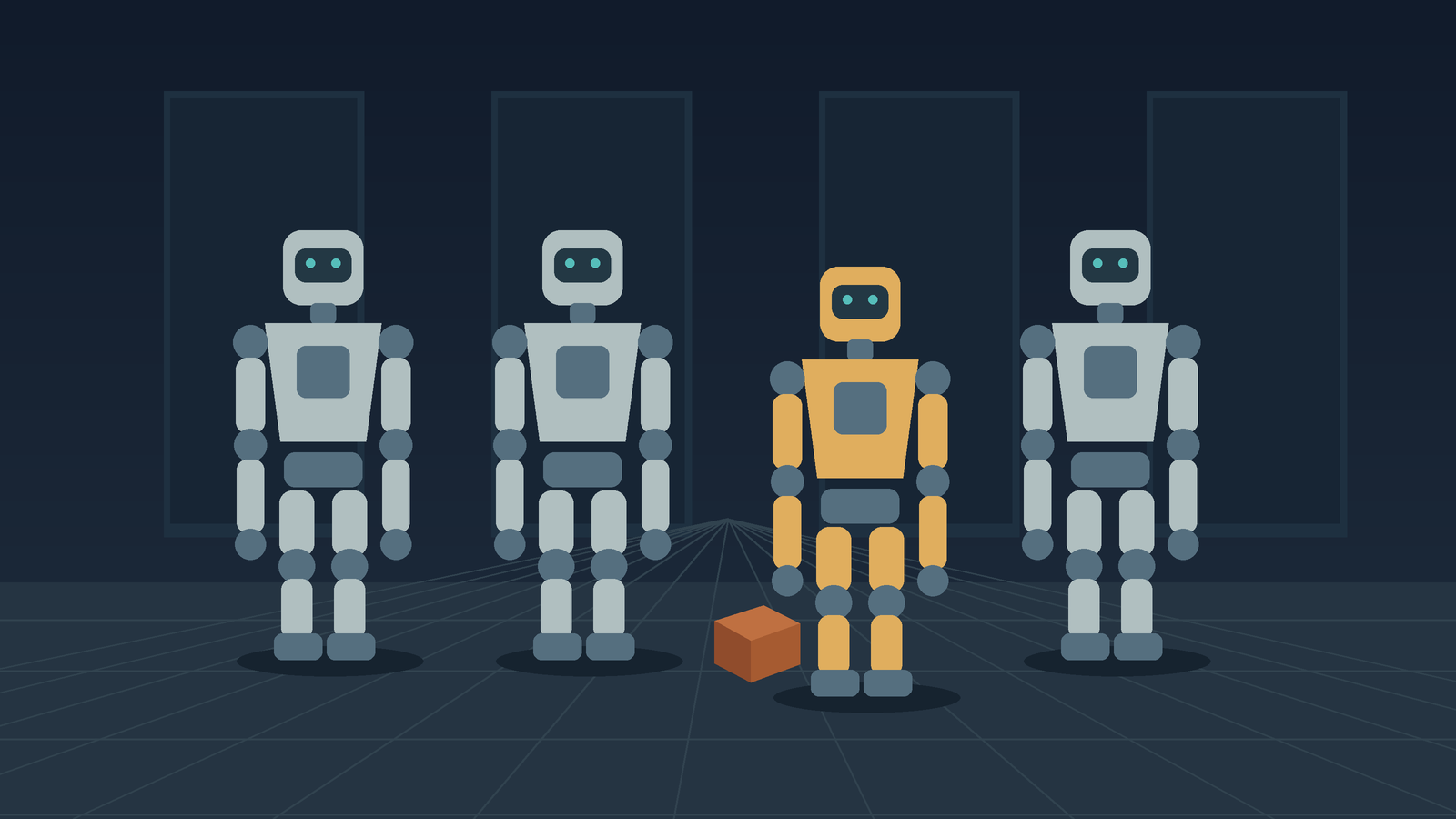
In Hangzhou, four machines have graduated. The school for robots that opened at the end of June has finished its first study cycle, and four automatons received their diplomas at a symbolic ceremony. The facility sits inside the National Pilot Base for Embodied AI Applications, and it is exactly what the name suggests: a training centre where machines learn specific jobs before anyone lets them into a real workplace. The inaugural class had thirty robots, aimed at manufacturing and services. Those that pass the assessments receive a certificate of operational fitness.
Before the easy jokes, give the engineering its due, because the engineering deserves it.
Realistic simulations instead of the laboratory bench
The stated purpose, as the Chinese agency Xinhua explains it, is to verify how reliable these machines are for use in factories, hospitals and offices, replacing classic laboratory tests with simulations in realistic environments. That single sentence is worth more than most of what the robotics industry has said about itself in the last five years.
A laboratory bench is a lie you build on purpose. Controlled light, fixed geometry, no surprises, no trolley left in the corridor by someone in a hurry, no floor still wet from cleaning. A manipulator that grips perfectly in a sterile cell and then meets the first object nobody planned for is not reliable. It is lucky. Luck is a fine thing in a demo video and a terrible thing in a ward.
So the programme is organised into four areas covering technical, healthcare, artistic and sporting tasks, and the engineers structure lessons and practical trials around the specific physical capabilities of each model, to test what it can actually do. During the assessments the machines have to show precision of movement and rapid adaptation when they meet an obstacle. That is not marketing. That is the part of the discipline that costs money and produces no press photographs.
It is worth keeping one distinction intact, since the programme itself makes it. These are simulations in realistic environments, not deployment. Realistic is a considerable step up from a bench, and it is still a rehearsal with the stage crew present.
Then somebody printed a certificate
And then there is the ceremony. The diploma handed to a machine that has no idea it received anything, in front of people who do.
This is where the project stops being an engineering programme and starts doing communications work, and the shift is worth naming out loud. A validation protocol has been dressed up as a graduation. Not a test report, not a conformity assessment, not a safety dossier. A school, a class, a diploma. The vocabulary of human education applied to industrial acceptance testing.
It matters because language sets expectations. A certified product is something a manufacturer has to stand behind, with a defined scope and a list of what was tested. A graduate is a colleague who earned their place and is now assumed to be fine. Nothing about a ceremony changes who actually answers for the machine, and that is the point: the framing invites you to stop asking. When one of these units eventually arrives in a hospital corridor and somebody has to explain to a nurse why it belongs there, "it is qualified" will be a much easier sentence than the honest one.
The sentence to read twice
Here is the passage that should give any engineer pause. The AI systems are examined to ensure the machines can make decisions autonomously and operate in close contact with human beings without any risk.
That is the objective of the test programme, and as an objective it is entirely legitimate. As a claim it would be impossible. No examination, however realistic, demonstrates the absence of risk. It demonstrates that across those particular trials, with those particular obstacles, the risk did not materialise. Passing a hard test tells you something real and bounded: this model handled these situations. It does not tell you what happens in the situation nobody wrote into the script, which is the only situation that ever makes the news.
This is not a philosophical quibble. It is the difference between a validation boundary and a guarantee. Every safety regime that works in the physical world, from lifts to pressure vessels to aviation, is built on exactly that distinction: certified within a defined envelope, monitored outside it, with somebody named who answers when the envelope is exceeded. A certificate of operational fitness is a useful document, and useful documents say where they stop.
And meanwhile, the numbers
According to Xinhua, China hosts more than 140 humanoid robot manufacturers. In 2025 the country shipped 14,400 robots, roughly 80% of all those sold worldwide.
Read that and then look at how the same subject is discussed elsewhere. Panels. Working groups. Ethical frameworks. Position papers on the future of work, delivered by people who have never watched a machine fail to negotiate a doorway. There is nothing wrong with thinking about consequences, and a country that builds the machines also gets to shape the norms by which everyone else uses them. But while one side runs classes of thirty units through four task domains and measures how fast a model recovers from an obstacle, the other side is scheduling the next conference on impact.
So the engineering is serious and the pageant around it is cheap, which is the usual ratio. Thirty machines went to school, four came out with a title that means nothing to them and quite a lot to whoever has to sell them. The trials happened, the obstacles were real enough, the certificate means something narrow and useful. The word diploma means something else, and it was chosen on purpose.
Raffaele Di Marzio
All my "insane" books on cybersecurity and governance are here 👇 https://cyberium.limited/bookshelf.html